
| Design | W. Dirks |
| Maiden Flight | 1972 |
| Materials | GFK, Balsa |
| Wingspan | 15 m |
| Wing Area | 11 m² |
| DOW | 210 kg |
| Seats | 1 |
| Remarks | DG-100 Prototype (Company: Glaser-Dirks/DG Flugzeugbau) |
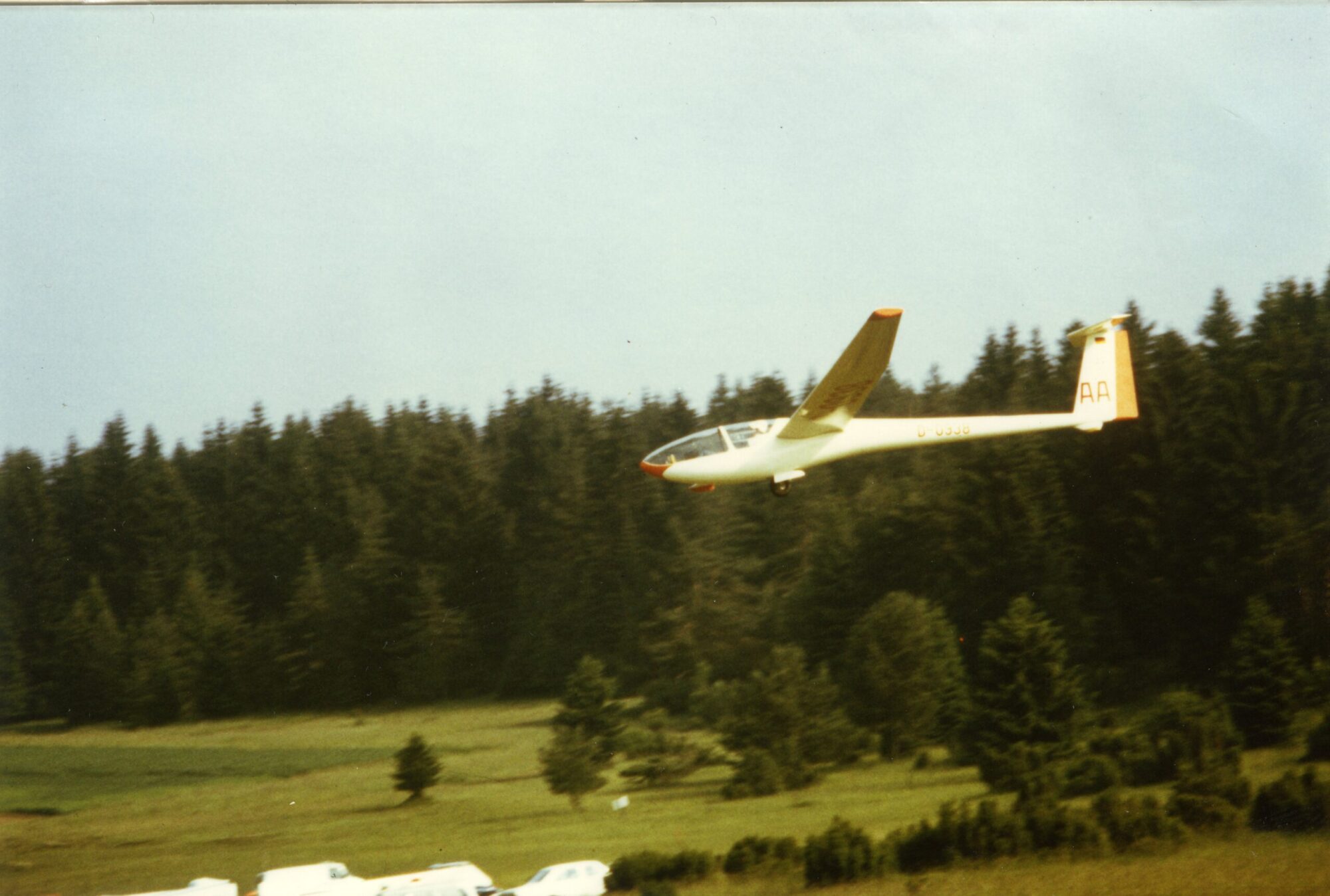
The D-38 was designed as a single seat, standard class glider with Wilhelm Dirks as chief designer. It was nimble and lightweight though equipped with water tanks if higher speeds were desired. It had also very forgiving flight characteristics to reduce workload in longer flights. In 1970 began the design of the D-38 and just 2 years later was its first flight which turned out as a huge success. As the Idaflieg would later say: “The best glider of standard class!”
The D-38 was Akaflieg Darmstadt’s showpiece. It became the prototype of the DG-100 and served as the foundation of the D-39, the Akaflieg’s sole motor glider. As the years passed, the D-38 lost its edge and found new purpose in flight-schooling. The flight hours gradually decreased and hard landings took their toll on the aging airframe. This ultimately resulted in an ugly break.
The once shining white and orange paintscheme would be replaced by a pure white one. Though as time passed it would also loose its “bling” as scratches and small cracks found their way on the glider. Wear and tear, especially in bearings and flight controls, became very apparent. At the end of the flightseason in 2014 the wings were taken into the workshop for maintenance since the play had significantly increased. The bearings had to be replaced with new ones. Work on the D-43 – the Akaflieg prototype at the time – would delay the maintenance further.
Only at the end of 2015 flightseason was maintenance of the wings on the D-38 resumed. The fuselage was also taken into the workshop to overhaul its flight control elements. The D-38 was designed and built so quickly that no real thought was put in for making the plane more maintenance-friendly. Hand-sized holes had to be drilled in the fuselage and wings to access the desired elements. They would be sealed later with filigree shafts.
Due to other projects, maintenance ended up taking until early 2026. In July of the same year, it successfully completed its second maiden flight and is now once again regularly part of flight operations.


